
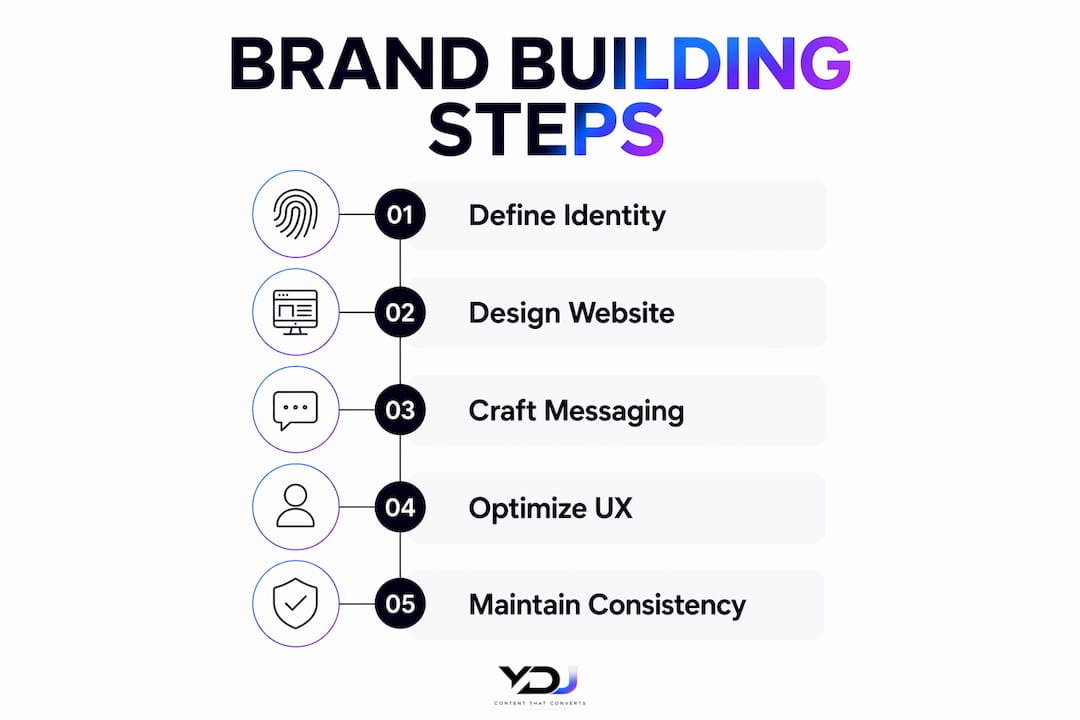
Your website is the single most powerful brand asset your small business controls. The role of website in brand building goes far beyond a logo on a homepage. It is the deliberate combination of design, messaging, and user experience that tells every visitor exactly who you are, what you stand for, and why they should trust you. Get it right, and your site works like a full-time brand ambassador. Get it wrong, and even great word-of-mouth loses its impact the moment someone lands on a cluttered, inconsistent page. The industry term for this discipline is website branding, and it is a strategic practice, not a cosmetic one.
What is the role of website in brand building?
Website branding is the deliberate design, messaging, and experience that communicates your brand identity online, directly influencing visitor trust and engagement. That definition matters because it separates website branding from basic web design. Web design focuses on how a site looks. Website branding focuses on what a site communicates and how that communication shapes perception.
For small business owners, this distinction is critical. Your website is often the first place a potential customer, partner, or investor forms an opinion about your business. A fragmented experience with mixed visuals and outdated assets signals internal misalignment before a single word is read. Consistency, on the other hand, signals professionalism and builds the kind of trust that converts visitors into paying customers.

Strong website branding also reaches beyond your customer base. Investors assess credibility through your digital presence. Potential partners judge your operational standards by how your site presents information. Every stakeholder group forms an impression within seconds of arriving on your page.
How visual design builds and reinforces brand identity
Visual identity is the fastest signal your brand sends. Before a visitor reads your headline, they have already processed your color palette, typography, and imagery. These elements work together to communicate personality, and inconsistency between them creates confusion.
The core visual elements that shape brand perception include:
- Logo placement and sizing: A logo that shifts position or scale across pages creates subtle distrust.
- Color palette: Consistent use of two to three brand colors builds recognition over time.
- Typography: Pairing one display font with one body font keeps pages readable and on-brand.
- Photography style: Mixing stock photos with candid shots in different lighting creates a disjointed feel.
- White space and layout: Generous spacing signals confidence; cluttered layouts signal chaos.
One common pitfall is chasing design trends. A trendy aesthetic may look current today but feel dated in 18 months. Brand identity requires durability, not novelty. Design systems that reinforce consistent visual identity and messaging frameworks are the foundation of effective branding. A design system is simply a documented set of rules: which fonts, which colors, which image styles, and which layout patterns your brand uses.
Pro Tip: Centralize all brand visuals using a digital asset management (DAM) system. DAM tools enforce version control and rights management, giving your team a single source of truth for every image, logo, and graphic used across your site.
Consistent visual branding also pays dividends in SEO and social sharing, where recognizable imagery increases click-through rates from search results and social feeds.
How does website messaging affect brand trust?
Voice and tone are as critical as visual identity. Consistent messaging builds trust and shapes perception more strongly than words alone. Your brand voice is your personality. Your tone adapts slightly by context but must stay recognizably connected to your core values.
Here is how to align messaging with brand identity across your site:
- Define your messaging pillars. Choose three to five core themes your brand always communicates. For a local contractor, those might be reliability, transparency, and craftsmanship. Every page should reflect at least one of these pillars.
- Write a tone of voice guide. Document whether your brand is formal or casual, warm or direct, technical or plain-spoken. Share it with anyone who writes copy for your site.
- Audit your headlines and CTAs. Your calls to action reveal your brand personality instantly. “Get a Free Quote” feels transactional. “Let’s Build Something Together” feels collaborative. Neither is wrong, but they signal very different brands.
- Check your navigation labels. Labels like “Solutions” versus “Services” or “About” versus “Our Story” each carry a different brand signal. Choose labels that match your voice.
Inconsistent tone is one of the most common trust killers on small business websites. A homepage that sounds warm and personal followed by a services page that reads like a legal document creates cognitive dissonance. Visitors notice the shift, even if they cannot name it.
Pro Tip: Align your website copywriting with your overall brand positioning statement. If your positioning is “the most approachable accountant in town,” every page should sound like a conversation, not a tax form.
Does UX design affect how customers perceive your brand?
User experience is a brand signal. Poor UX such as slow speed, confusing navigation, and lack of responsiveness damages brand perception significantly. A site that loads slowly or breaks on mobile tells visitors you do not pay attention to detail. That impression transfers directly to your product or service.
The UX elements that most directly affect brand image include:
- Page speed: Visitors form trust judgments within the first few seconds. A slow site erodes that trust before your content loads.
- Mobile responsiveness: More than half of web traffic arrives on mobile devices. A site that does not adapt to smaller screens signals that you are behind the times.
- Navigation clarity: Visitors should find what they need in three clicks or fewer. Buried information creates frustration, and frustrated visitors leave.
- Accessibility: Readable font sizes, sufficient color contrast, and alt text on images show that your brand respects all visitors.
- Clear calls to action: Every page needs one primary CTA. Multiple competing CTAs create decision paralysis.
Brand consistency without usability fails. A beautifully branded site that is hard to use still loses customers. The goal is for UX and branding to reinforce each other. When a visitor feels at ease navigating your site, that ease becomes associated with your brand. That emotional connection is what tips a fence-sitter into a customer.
Good UX copywriting also matters. Button labels, error messages, and form instructions all carry your brand voice. “Submit” is generic. “Send My Request” is branded. Small choices compound into a coherent experience.
Why your website must be treated as a living asset
A website is not a one-time project. Treating a website as a living asset enables genuine emotional connections, authority, and agility in competitive markets. Businesses that launch a site and ignore it for two years watch their brand drift out of alignment with their actual offerings and values.
Keeping your site current requires a structured approach:
- Schedule quarterly content reviews. Check that service descriptions, pricing, and team bios reflect your current business. Outdated information destroys credibility faster than a bad review.
- Run A/B tests on key pages. Data-driven iterations guide improvements in layout, CTAs, user flows, and content relevance. Test one element at a time so you know what actually moved the needle.
- Monitor analytics monthly. Track bounce rate, time on page, and conversion rate by page. A page with high traffic but low conversions is a brand signal problem, not just a design problem.
- Align updates with brand milestones. When you launch a new service, rebrand, or shift your positioning, your website must reflect that change within days, not months.
Website conversion optimization is the ongoing practice of improving how well your site turns visitors into leads and customers. It is inseparable from brand building because every improvement to clarity, speed, or messaging also strengthens how visitors perceive your brand. The two goals reinforce each other.
Brand drift is a real risk. When different team members update different pages without a shared style guide, the site gradually loses coherence. Governance matters as much as design.
Key Takeaways
A website is the primary environment where brand identity is expressed, tested, and either reinforced or eroded with every visitor interaction.
| Point | Details |
|---|---|
| Website branding is strategic | It requires alignment across design, messaging, and UX, not just visual updates. |
| Visual consistency builds recognition | Use a defined color palette, typography, and image style across every page. |
| Tone shapes trust | Inconsistent voice between pages creates distrust, even when visitors cannot name the cause. |
| UX is a brand signal | Slow, unresponsive, or confusing sites damage brand perception before content is read. |
| Treat your site as a living asset | Quarterly reviews, analytics monitoring, and A/B testing keep your brand aligned and converting. |
What I have learned after building dozens of small business websites
Most small business owners I work with think website branding means picking a nice color scheme and uploading their logo. That misconception costs them customers every single day.
The businesses that build real brand equity through their websites share one habit: they treat the site as an operational system, not a finished product. They review it regularly, test their CTAs, and update their copy when their positioning shifts. They also invest in a tone of voice guide before they write a single word of copy. That document alone prevents the trust-killing inconsistency I see on most small business sites.
The other thing I have noticed is that small businesses underestimate how much UX affects brand perception. I have seen beautifully designed sites lose customers because the contact form was buried three clicks deep. Visitors do not separate “hard to use” from “unprofessional.” They just leave.
My honest advice: start with a brand discovery process before you touch design or copy. Get clear on your identity, your audience, and your voice. Then build the site around those foundations. Everything else, the colors, the fonts, the layout, flows naturally from that clarity. Without it, you are decorating a house with no foundation.
— Youri
How Ydjmedia helps small businesses build a brand online
Ydjmedia builds modern, mobile-first websites designed to express your brand clearly and convert visitors into customers. Every site starts with a free demo so you can see exactly what your business looks like online before spending a dollar.
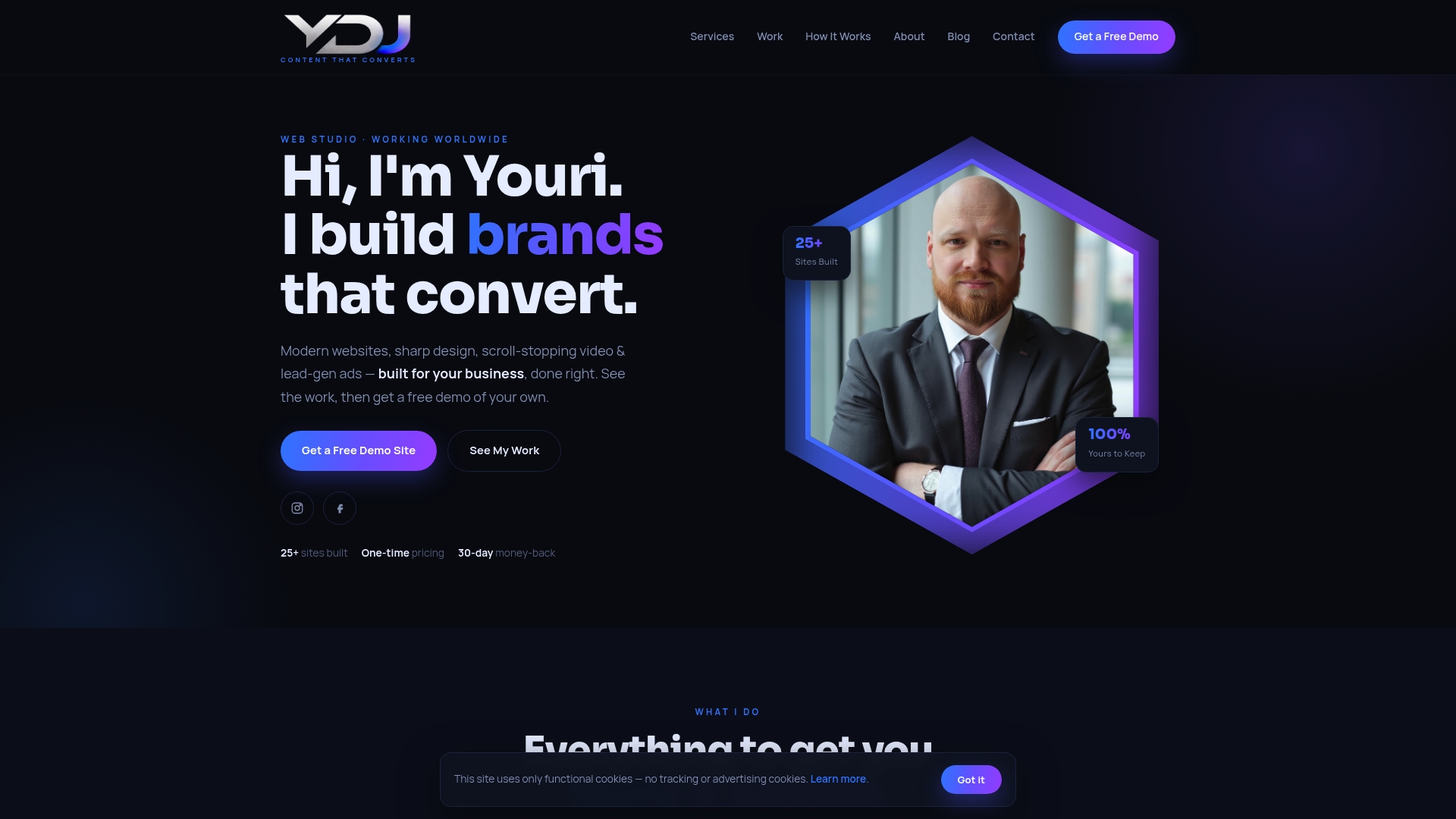
There are no surprise retainers and no agency runaround. Ydjmedia offers clear, one-time pricing and a 30-day money-back guarantee. Whether you need a professional website that reflects your brand from day one, or a full redesign that aligns your visuals, messaging, and UX with where your business is headed, Ydjmedia delivers fast, without the guesswork. See your site live before you commit.
FAQ
What is website branding?
Website branding is the deliberate use of design, messaging, and user experience to communicate a brand’s identity online. It influences visitor trust, recognition, and conversion from the first page load.
How does website design affect brand perception?
Consistent use of color, typography, and imagery signals professionalism and builds recognition. Fragmented or outdated visuals create subconscious distrust before a visitor reads a single word.
Why does tone of voice matter on a website?
Voice and tone shape how visitors interpret your brand values and credibility. Inconsistent tone between pages creates cognitive dissonance that erodes trust, even when visitors cannot identify the cause.
How often should a small business update its website?
A quarterly content review is the minimum. Key pages like services, pricing, and team bios should reflect current business reality at all times, and analytics should be checked monthly to catch conversion problems early.
What is the biggest website branding mistake small businesses make?
The most common mistake is treating a website as a finished product rather than a living asset. Businesses that stop updating their site after launch experience brand drift, where the site no longer reflects their actual positioning, services, or voice.