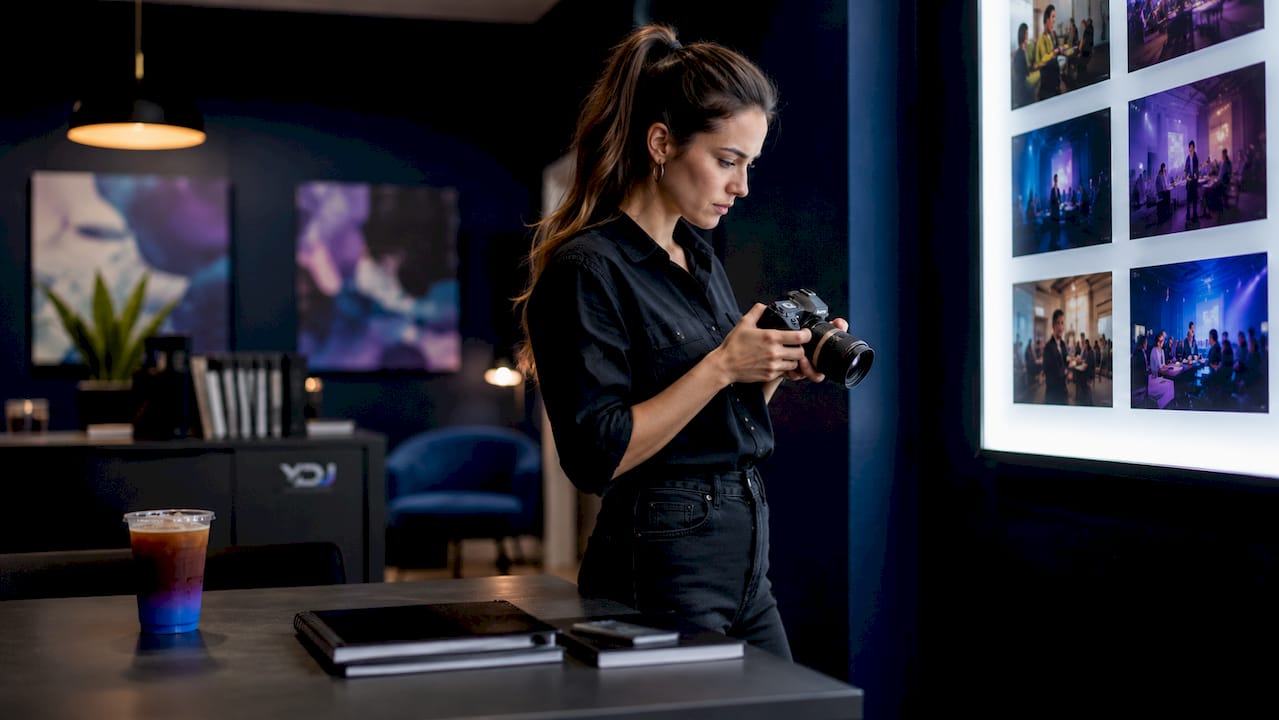
Service photos are the single most effective visual tool a small business can use to turn website visitors into paying customers. The reason why service photos improve conversions comes down to one thing: proof. Customers cannot touch your work, visit your shop, or meet your team before they decide to buy. A strong set of authentic service images fills that gap. Research shows that tailoring visual content to specific platforms can lift conversion rates by 58% to 87%. That number is not a rounding error. It reflects how much buying decisions depend on what people see before they commit.
Why service photos improve conversions: trust comes first
Service photos reduce customer skepticism by answering the questions buyers ask before they ever contact you. “Is this business real? Do they do quality work? Will I get what I see?” A photo of your team on the job, your branded truck parked at a client’s home, or a finished installation answers all three without a single word of copy.
Google Business Profile guidance for service businesses specifically calls out work-in-progress shots, team presence, branded vehicles, and real service environments as the photos that build legitimacy. Generic stock images do not do this. A photo of a smiling model holding a wrench tells a customer nothing about your actual plumbing business. A photo of your crew replacing a water heater tells them everything.
The psychology here is straightforward. Buyers use visual cues to assess risk. A business with no photos feels anonymous and unproven. A business with a full photo library feels established and accountable. That shift in perception directly reduces the hesitation that kills conversions.
- Real people on the job. Show your actual team, not stock models. Faces build connection and accountability.
- Work in progress. Photos of your process prove you do the work yourself and show the care you take.
- Branded vehicles and equipment. These signal investment, professionalism, and that you are a real operation.
- Before and after shots. These are the most persuasive format for service businesses because they show measurable results.
- Finished work in context. A completed landscaping job photographed at the client’s home is far more convincing than a standalone product shot.
Pro Tip: Profiles with real service photos consistently outperform those relying on logos or generic branding images. Aim to show real work in every photo you publish.
What image qualities actually drive purchase decisions?
Image quality and content mix both matter, but not in the way most small business owners assume. The goal is not perfection. The goal is clarity and authenticity working together.
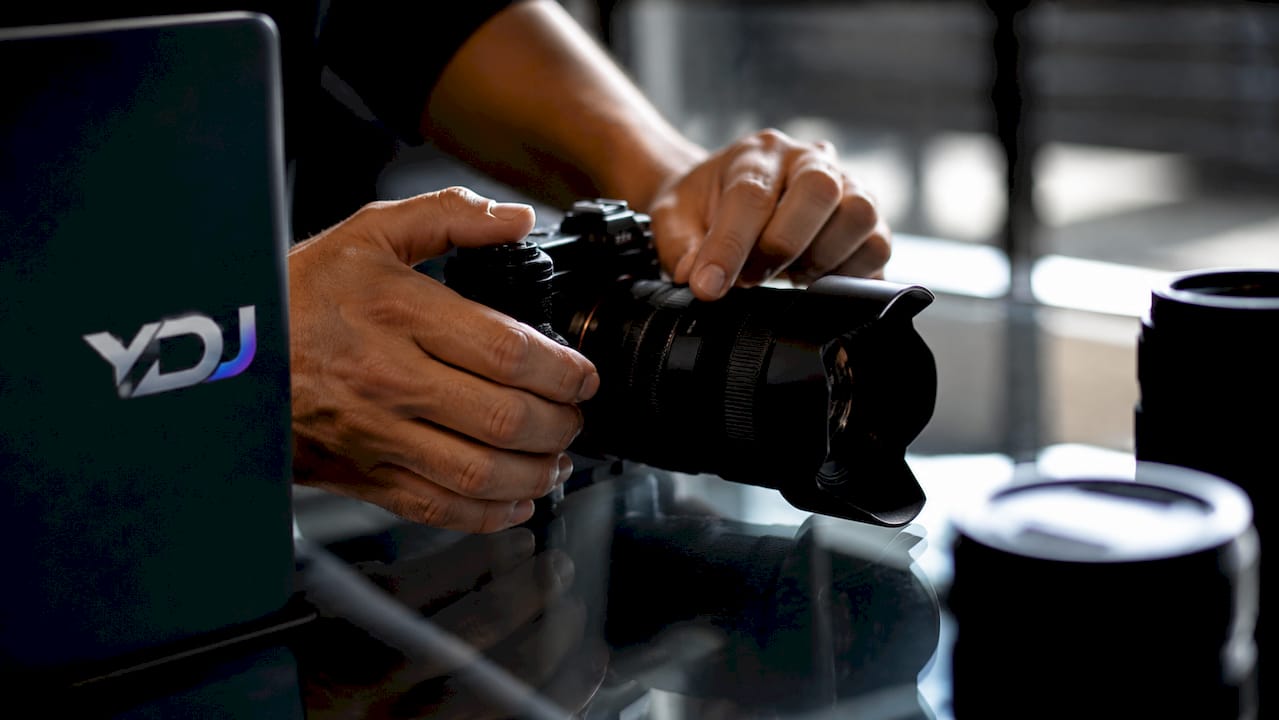
Empirical research on image composition shows that a Holistic Image Proportion of approximately 0.5 yields the highest sales performance and purchase intention. In plain terms, that means roughly half your photos should show the full context of your service (a technician working in a kitchen, a finished deck on a real home), and the other half should show close-up detail (the quality of a tile edge, the neatness of a cable installation). Neither type alone is enough. Context without detail leaves buyers uncertain about quality. Detail without context leaves them uncertain about fit.
Poor-quality images create a different problem. Blurry, dark, or badly framed photos signal carelessness. Overly polished images that do not reflect real service outcomes can generate skepticism and complaints. Buyers have seen enough retouched photography to know when something looks too good to be true.
Here is a practical framework for building a photo set that converts:
- Start with a cover photo. This is the first image a customer sees on your website or Google profile. Make it your best work, shot in good natural light, with no clutter in the frame.
- Add three to five process shots. Show your team at work. These build confidence in your method, not just your results.
- Include at least two close-up detail shots. Highlight the quality of your craftsmanship or the care in your finishing work.
- Photograph completed projects in their real environment. A painted room looks better in the client’s home than against a white studio backdrop.
- Refresh your photo library every six months. Outdated photos signal a stagnant business.
Pro Tip: Clear, accurate photos help customers evaluate faster and with more confidence. Accuracy matters as much as quality. If your photo shows a premium finish and your service delivers a standard one, you will get complaints, not conversions.
How does platform choice change your photo strategy?
The same photo does not perform equally on every platform. Buyer psychology shifts depending on where someone is shopping, and your images need to match those expectations.
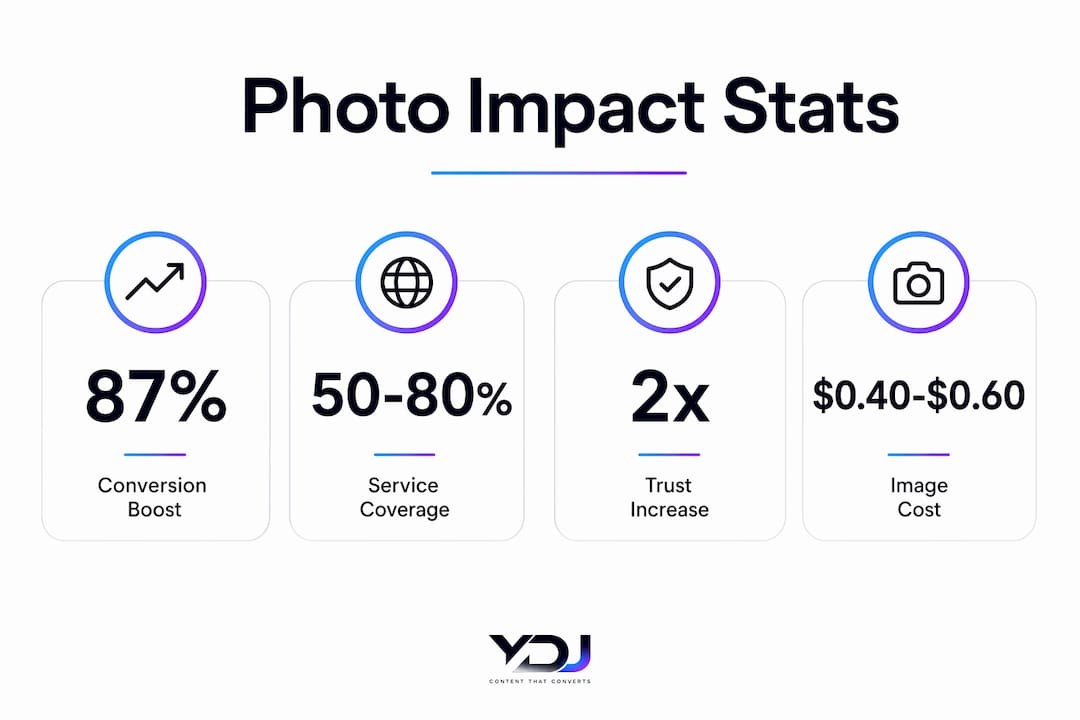
Case study data shows that platform-tailored imagery produced an 87% conversion increase on Walmart for a tech accessories brand. That result came from matching the image style to the platform’s audience, not from using higher-resolution photos. Family-oriented, lifestyle-context images performed best on Walmart. Multi-angle detail shots performed best on eBay, where buyers tend to be more technically minded and want to inspect before purchasing.
For service businesses, the same logic applies across your digital presence.
| Platform | Buyer mindset | Best photo type |
|---|---|---|
| Google Business Profile | “Is this business legitimate?” | Team photos, branded vehicles, real job sites |
| Website homepage | “Can I trust this company with my home?” | Before/after, finished work in context |
| Facebook/Instagram | “Does this look like my neighborhood?” | Lifestyle context, local job sites, team personality |
| Email or landing pages | “What exactly will I get?” | Close-up detail, process shots, results |
The practical takeaway is that you need more than one version of your visual story. A photo that works on your homepage hero section may not work as a Google Business Profile cover image. Tailoring takes time, but the conversion data makes it worth the effort.
AI photography tools now produce professional-quality images at $0.40–$0.60 per image, compared to $150–$500 for a traditional studio shoot. Tests show statistically indistinguishable conversion rates between AI-produced and studio-produced images. For small businesses that need volume across multiple platforms, this changes the economics of visual content entirely.
What practical steps build a high-converting photo library?
Building a photo library that actually drives sales requires a plan, not just a camera. Start with coverage, then focus on quality.
Selective photo coverage outperforms universal coverage. Providing photos for 50%–80% of your key services creates stronger visual attention cues than photographing everything. When every service has a photo, nothing stands out. When your most profitable services have the best photos, buyers naturally focus there.
Here is what a complete service photo library looks like:
- Cover photo. One strong hero image for your website and Google profile.
- Team photos. Individual and group shots that show real people, not stock faces.
- Branded vehicle and equipment shots. These signal investment and professionalism.
- Work-in-progress photos. Three to five images showing your process across different job types.
- Finished work photos. At least one per core service, photographed at the actual job site.
- Before and after pairs. The most persuasive format for renovation, cleaning, landscaping, and repair services.
One rule that many small business owners get wrong: do not fake a storefront if you do not have one. Authenticity in service photos matters more than polish. A photo of your actual work van parked at a real job site beats a staged showroom shot every time. Customers who feel misled by photos do not become repeat buyers.
For small businesses with limited budgets, the website conversion tips that move the needle most are often the simplest: consistent lighting, a clean background, and photos that show real results. You do not need a professional photographer for every shot. You need honest, clear images that match what a customer will actually experience when they hire you.
Pair your photo strategy with social proof elements like testimonials. A photo of a finished job next to a five-star review from that client is one of the most conversion-friendly combinations you can put on a service page.
Key Takeaways
Service photos improve conversions because they reduce buyer risk by providing visual proof of quality, legitimacy, and real-world results.
| Point | Details |
|---|---|
| Authenticity beats polish | Real job site photos outperform staged or stock images for building trust. |
| Balance context and detail | A 50/50 mix of holistic and close-up shots maximizes purchase intent. |
| Tailor photos by platform | Platform-specific imagery can lift conversions by 58%–87% depending on audience. |
| Selective coverage wins | Photographing 50%–80% of key services creates stronger attention cues than covering everything. |
| AI lowers the cost barrier | AI-generated images cost a fraction of studio shoots with comparable conversion performance. |
What I’ve learned about service photos after building dozens of websites
I’ve built websites for plumbers, landscapers, cleaning companies, and contractors. The pattern is always the same. The businesses with the best photos get the most inquiries, even when their pricing is higher than competitors.
What surprises most small business owners is that “best photos” does not mean most expensive. The highest-converting images I’ve seen are often taken on a smartphone at an actual job site. What they have in common is honesty. You can see real work, real people, and real results. That is what tips a fence-sitter into a customer.
The mistake I see most often is businesses treating photos as an afterthought. They spend weeks on their website copy and then upload three blurry images from three years ago. Buyers notice. A weak photo library on an otherwise strong website is like a great resume with a typo on the first line. It undermines everything else.
The trend I am watching in 2026 is the rise of AI-assisted photo production for service businesses. The cost drop is real, and the quality is there. Small businesses that use AI tools to maintain a fresh, platform-specific photo library will have a measurable edge over those still relying on a single annual photoshoot. The businesses that treat visual content as an ongoing asset, not a one-time project, are the ones that consistently outperform on conversion.
— Youri
How Ydjmedia helps your service photos work harder
Your photos are only as powerful as the website presenting them. Ydjmedia builds mobile-first websites designed to put your service images front and center, in the right format, on the right pages, for the right buyers.
Ydjmedia offers a no-risk free demo site so you can see exactly how your photos and services will look before you spend a dollar. There are no surprise retainers, no agency runaround, and a 30-day money-back guarantee. If you want a website that turns your best work into your best sales tool, Ydjmedia builds it fast, builds it right, and backs it up. See what your new website could look like today.
FAQ
Why do service photos increase conversion rates?
Service photos reduce buyer uncertainty by providing visual proof of quality and legitimacy. Customers who can see real work, real people, and real results are far more likely to contact or hire a business.
How many photos does a service business need?
Covering 50%–80% of your core services with photos outperforms full coverage. Focus your best images on your most profitable services to create stronger attention cues.
Do photo quality and authenticity both matter?
Both matter, but authenticity carries more weight. Overly polished images that do not reflect real outcomes can raise suspicion and reduce trust, while clear and honest photos build buyer confidence.
What types of service photos convert best?
Before-and-after pairs, work-in-progress shots, and finished work photographed at real job sites consistently outperform stock images or staged studio photos for service businesses.
Can small businesses afford professional service photos?
AI photography now produces professional-quality images at $0.40–$0.60 per image, compared to $150–$500 for a studio shoot, with comparable conversion performance. Budget is no longer a barrier to a strong photo library.